Most people ask this question sideways. They ask which one is more serious, or which one a proper hillwalker wears, and buy accordingly. The useful version of the question is narrower: what are you carrying, where are you going, and how wet will your feet get? Answer those three and the choice mostly makes itself.
We are not going to tell you to buy boots. On the right walk, trail shoes are better equipment than a heavy boot, and on the wrong walk the reverse is true. The two are built differently because they solve different problems.
The difference is underfoot, not around the ankle
The obvious difference is height. The important difference is what sits under your foot.
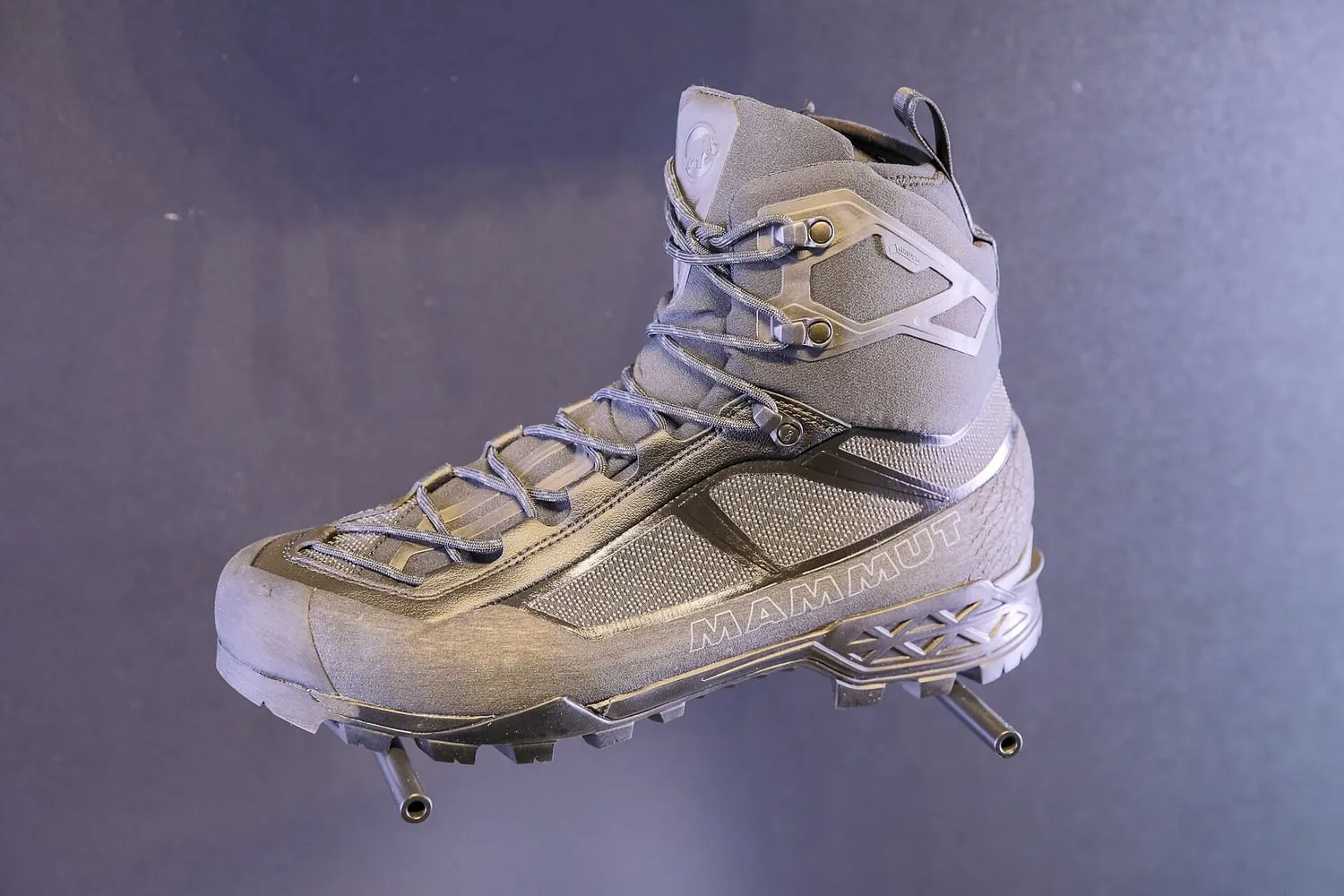
A hiking boot usually has a stiffer midsole, a thicker sole unit and some form of shank or reinforcing plate. The result is a platform that does not fold around the shape of the ground. That is what you want once you are carrying a load: a stiff sole and a firm edge stop your foot working hard on every step, and the structure takes some of the effort away from the small muscles of the foot. On rough ground it also stops sharp stones pressing up through the sole.
A trail shoe is the opposite: flexible, low to the ground and light. Flexibility lets your foot adapt to the surface and gives you more information about what you are standing on. Lightness matters more than most people expect, because you lift each shoe thousands of times a day and the effect accumulates over distance.
How much are you carrying?
Load is the first variable to settle, and the one most people underestimate.
- Day walks with a small pack. Trail shoes are usually the better tool. The load is light, so stiffness buys you very little.
- Long days with a heavier pack, or any route where you carry water for a dry stretch. This is where a stiffer sole and a more supportive upper start to earn their weight.
- Multi-day trips with food, fuel, shelter and water. Boots, or a stiff mid-height shoe. This is where flexible footwear begins to feel like hard work, particularly late in the day when your feet are already tired.
Terrain, and the height of the cuff
Cuff height is the least informative specification in footwear and the most discussed. A high boot protects your ankle from abrasion and from rock edges, and it limits how far the ankle can move inside the boot. Whether it reduces the number of sprained ankles is contested, and we cannot settle it here; grip, where you put your feet and your own stability matter at least as much.
What the cuff does reliably is add weight and, in a waterproof boot, make the boot slower to drain and dry. Height genuinely helps in a few situations:
- deep mud and bog, where a low shoe fills with water and grit;
- snow and slush, where a boot seals against gaiters and keeps the cold out;
- scree and loose rock, where a boot keeps grit away from the foot and takes the abrasion instead of your ankle.
For everything else - forest tracks, moorland paths, valley approaches, dry ridges - a low shoe with a good sole is more comfortable and less tiring.
Wet feet are the hidden variable
Boots and shoes deal with water in opposite ways, and this matters more than any other difference for walkers in a wet climate.
A waterproof boot keeps water out until water gets in, and then keeps it in. Once a membrane-lined boot fills - crossing a river, sinking into a bog, or walking a long day in rain that runs down your legs - it can take hours to dry. A wet boot is heavier, colder and much more likely to cause blisters.
A mesh trail shoe lets water in immediately, drains reasonably well and dries while you walk. On a wet hill day that is often the more comfortable setup, even though the shoe is not waterproof at all.
So the question is not “waterproof or not”. It is “will my feet stay dry either way?” If water will come in over the top of the boot, a mesh shoe is the better answer. If the wet is rain, spray and shallow puddles - the ordinary case on a good path - a membrane is doing real work.
Uppers, and what each one costs you
Leather uppers, whether full grain or nubuck, resist abrasion, take a shape and hold it, and can be treated to shed water. They weigh more, absorb water if they are neglected, and dry slowly. Synthetic uppers are lighter, dry faster, need less maintenance and usually cost less; they also crease and break down sooner, particularly where the shoe flexes behind the toes.
Neither is better in the abstract. In a wet climate a synthetic shoe is often the sensible choice, while a leather boot makes sense if you want the same pair for years and are prepared to look after it.
Fit decides more than construction
Whichever you choose, fit matters more than any feature list. Four checks:
- Heel hold. Your heel should stay put without being crushed. If it lifts when you walk uphill, the footwear is too long or the wrong volume for your foot.
- Toe room. Stand on a slope with your toes pointed downhill. If your toes touch the front, there is not enough room for long descents.
- Width across the ball. If the upper bulges over the sole, the shoe is too narrow, and a longer size will not fix it.
- Instep and lacing. Lacing should let you tighten over a high instep without pressure on the top of the foot. If no lacing pattern fixes that pressure, the last is the wrong shape.
Boots need some break-in, and a leather boot that feels snug rather than tight is usually right after a few weeks. A synthetic shoe should be comfortable from the first walk, because it will not stretch where it hurts.
What can be repaired
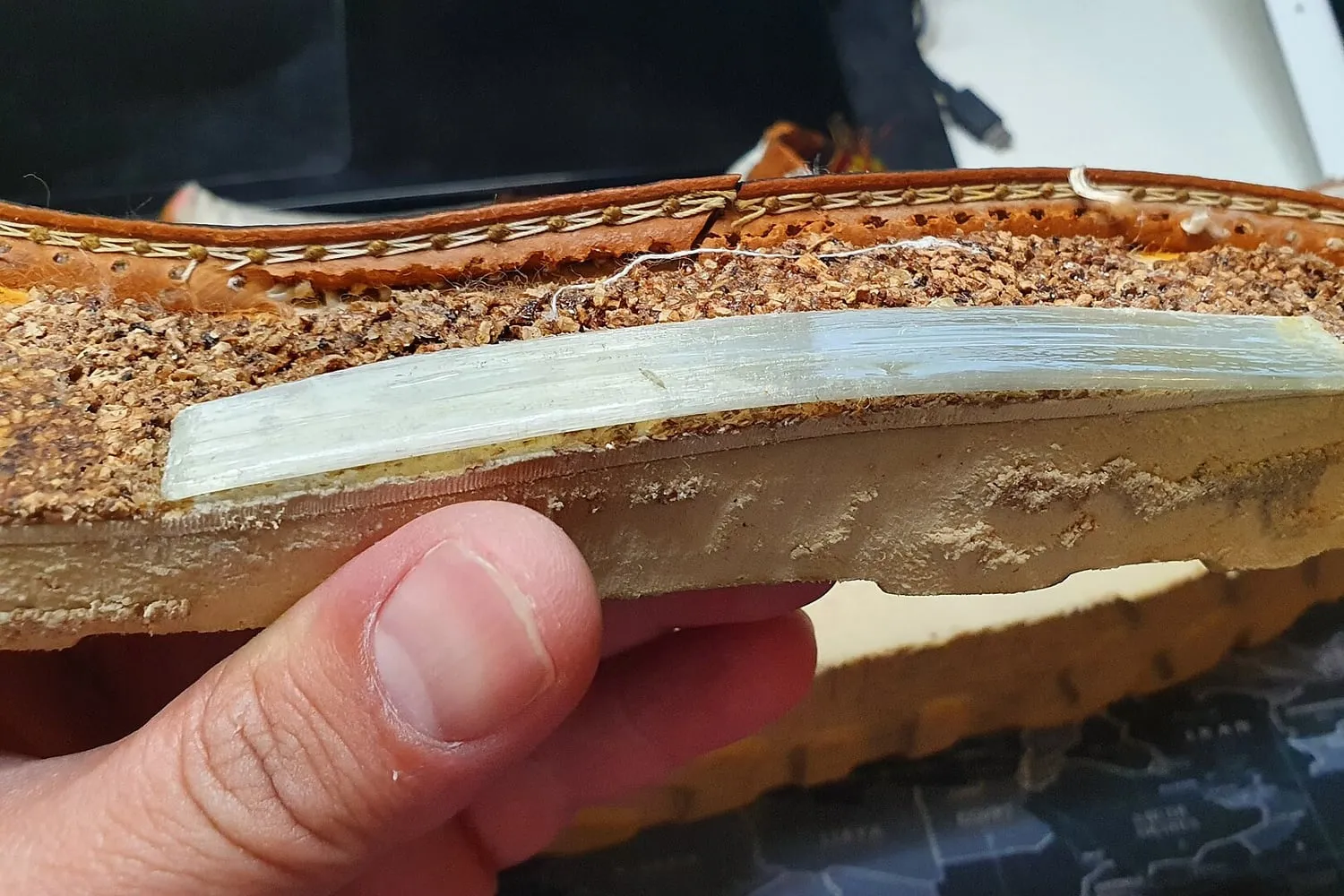
This is where boots win on lifetime cost. A stitched or stitchdown boot can often be resoled, and rands, eyelets, hooks and laces can be replaced. A cracked or delaminated membrane usually cannot be repaired, and a shoe with a moulded-on sole and a collapsed midsole is generally finished.
If you want one pair to last a decade, buy something a repairer can rebuild. If you want the lightest thing that works, buy shoes and accept that they are a consumable.
A short decision order
- Weigh your pack. Where the load is light, stiffness is optional; where it is not, it is the first thing to get right.
- Decide whether your feet will get wet from above, from below, or not at all.
- Choose for the ground you actually walk on, not the ground you aspire to.
- Fit the shoe with the socks you use, and check heel hold and toe room on a slope.
- Only then look at uppers, brand and price.
Neither boots nor trail shoes are a rank. They are two answers to two different sets of conditions, and the conditions are the only part worth arguing about.